


Seven weights, one kettlebell — replace a rack without the clutter
We want strength training that fits into our lives — not a garage full of equipment. In small apartments or shared spaces, juggling multiple kettlebells or constantly changing plates turns efficient workouts into a cluttered, time‑consuming chore.
The LIFERUN 7 in 1 Adjustable Kettlebell aims to fix that by packing seven selectable weights into one compact unit with a quick‑adjust mechanism and safety lock. We found the die‑cast aluminum handle and ABS body feel durable for full‑body and cross‑training sessions, making it ideal for beginners to intermediate lifters — though the handle can be slippery and the top weight may be limiting for advanced athletes.
LIFERUN 7-in-1 Adjustable Kettlebell 10kg

We found this kettlebell to be an excellent solution for small spaces and progressive home training, offering a robust build and rapid weight switching. It’s ideal for beginners to intermediate athletes, though advanced lifters may outgrow the top weight.
Overview
We approached the LIFERUN 7-in-1 Adjustable Kettlebell as a compact alternative to a multi-piece kettlebell rack. Designed to replace several individual bells, the unit integrates a die-cast aluminum handle, a modular stack of weight plates, and an ABS shell that becomes the visible bell body. In our hands-on testing we focused on construction, day-to-day usability, safety, and how it translates to real workouts.
What’s inside the box
Design and materials
The outer shell is made from high-strength ABS plastic, chosen to keep the overall size reasonable and to resist knocks and scuffs that happen during normal use. Internally, the selectable weight plates are stacked and locked into place, while the handle is die-cast aluminum with a wide, ergonomic profile. The combination of metal handle and polymer shell keeps manufacturing costs down while preserving structural integrity.
Key design takeaways:
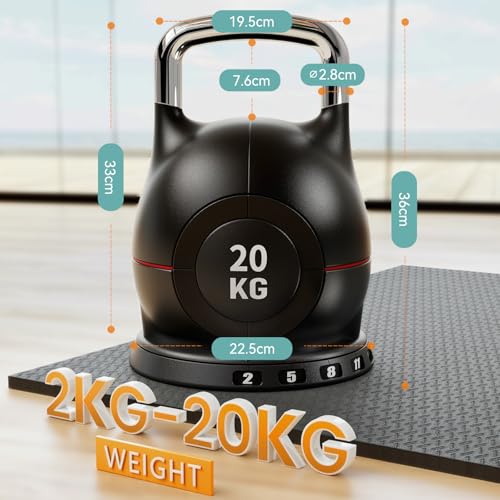
How the adjustability system works
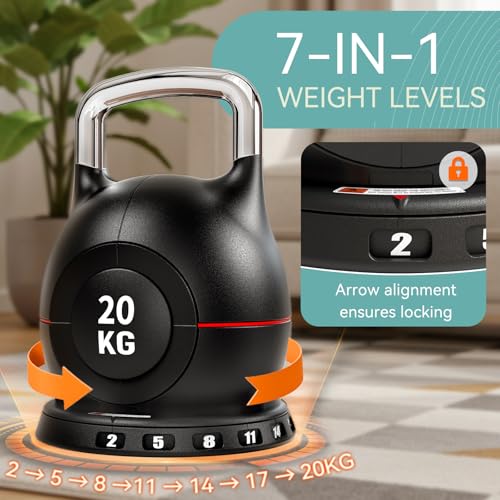
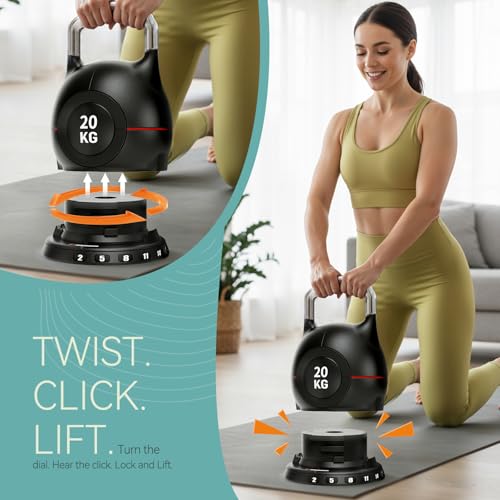
The adjustment mechanism relies on stacking internal plates in a specific order and aligning a red indicator before locking the bell body over the selected plates. When the indicator aligns and the knob/locking action is engaged, only the chosen plates lift with the handle—non-selected plates stay in the base.
We created a shorthand table to show the weight increments and how they map to training progression:
| Setting | Total Weight (kg) | Typical Use Case |
|---|---|---|
| 1 | 1.5 | Warm-ups, rehab, mobility drills |
| 2 | 3.0 | Light conditioning, beginners |
| 3 | 4.5 | Core circuits, tempo work |
| 4 | 6.0 | Standard swings, goblet squats |
| 5 | 7.5 | Heavier conditioning, loaded carries |
| 6 | 9.0 | Stronger kettlebell work, higher reps |
| 7 | 10.0 | Max for this model; low-rep strength work |
Adjusting to a new setting is fast once you know the plate order: align the arrows, rotate to lock, and test the lift before performing dynamic moves. We recommend practicing the swap sequence on the floor until muscle memory takes over.
Safety locking and assembly tips
The safety lock is a necessary feature for any adjustable kettlebell. It prevents plates from shifting during ballistic movements and gives confidence when performing swings and cleans. Our procedural tips:
If you ever feel a rattle or loose movement, stop and re-seat the plates. The locking mechanism is straightforward but depends on correct plate sequencing to function reliably.
Ergonomics, grip, and real-world handling
The grip profile is intentionally wide; this lets users perform two-handed swings and single-arm transitions with room to spare. The aluminum handle is smooth and comfortable, but we noticed that the polished finish can be slick if hands are sweaty. We like the handle width and contour, but recommend adding a strip of grip tape or chalk for heavy or high-rep sessions.
Practical observations:
Training applications and programming ideas
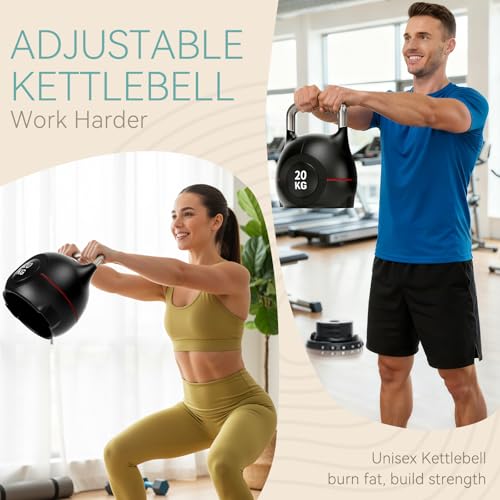
This unit is best positioned for progressive conditioning and technique-focused work rather than maximal strength for advanced lifters. It shines in circuits, high-intensity interval sessions, and general conditioning.
Examples we used successfully:
Space, storage, and portability
One of the biggest selling points is the one-unit footprint that replaces several bells. The flat base keeps it upright, and the molded shell prevents paint chipping and floor damage if dropped lightly. For small apartments or multi-use rooms, the unit stores neatly in a corner or shelf.
Compact benefits:
Maintenance and longevity
To keep the mechanism working smoothly we recommend occasional inspection and cleaning:
Who should buy this
We see this product as an excellent match for:
If you’re a competitive kettlebell athlete or lifting very heavy loads, the 10 kg cap will limit long-term progression and you may prefer a set of cast-iron bells.
Quick comparison (when to choose this vs traditional kettlebells)
Final notes from our testing
After multiple sessions focusing on swings, squats, carries, and circuits, we came away impressed by the engineering tradeoffs: it’s not a substitute for a full kettlebell arsenal for heavy lifters, but it’s a clever, well-executed tool for most home users. The adjustment system rewards a little patience at first and then becomes an efficient way to progress workouts without cluttering the space.
FAQ
Once you know the plate order and alignment markers, switching settings takes about 15–30 seconds. We recommend placing the unit on the floor and following the red arrows when swapping plates to avoid trial-and-error delays.
Yes — the die-cast aluminum handle is wide and ergonomic, making two-handed swings comfortable and stable. For very high-rep or sweaty sessions we advise adding grip tape or using chalk to prevent slipping.
It’s an excellent space-saving substitute for many users, especially beginners and intermediates, but the top load of 10 kg may be insufficient for advanced lifters who need heavier, smaller-profile cast-iron bells for maximal strength work.
Keep the handle and housing clean and dry, check plate seating and alignment periodically, and avoid harsh drops. If you notice any unusual movement, resequence the plates and test the lock before resuming dynamic exercises.
Yes — the ABS body is more forgiving than raw cast iron and is less likely to dent floors or walls from incidental contact. We still recommend using a mat for dynamic moves and to protect both the floor and the bell over time.
Absolutely. The adjustment process is single-user friendly, though it helps to do the first few setups with the quick-start guide handy to ensure plates are stacked in the correct order.
Leave a Reply